Two steps are required to prepare your video for use with AV-Sync:
Prepare the video file (replace the audio with the AV-Sync track). The video file will play on your mediaplayer.
Prepare the audio file (split off the audio from the video to a MP3 file). The audio file will be uploaded in the TourEditor to be played on the Podcatcher.
Creating these files is an automatic process when using the video tool.
For more information on the usage of the tool, or for detailed instructions on how to do the media file preparation manually, please refer to the following sections.
2. AV-Sync video tool
The easiest way to prepare you media files is by using the AV-Sync video tool. You can download it here:
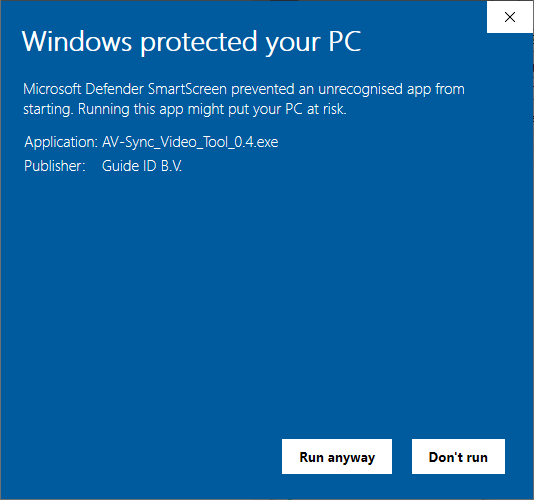
Note: When opening the program, you may see the message “Windows protected your PC”. Please click the button “Run anyway” to continue.
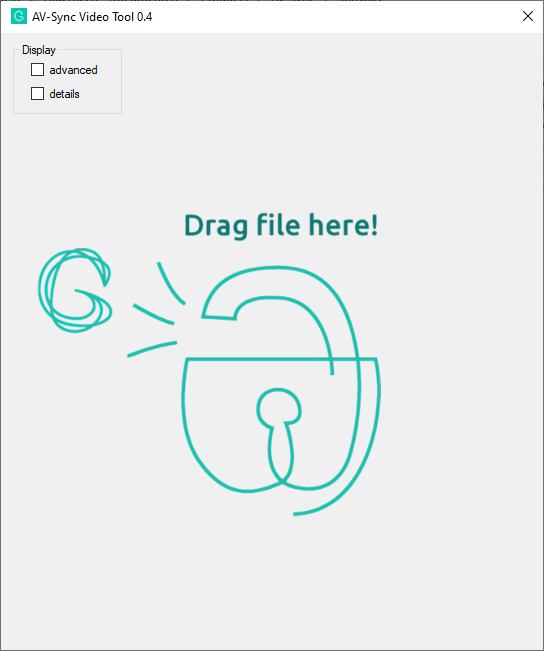
You can drag and drop any video on the tool, and it will create two new files in the same directory as the input file:
<inputfilename>_video.mp4
<inputfilename>_audio.mp3
The video file is to be placed on your mediaplayer. The audio file is to be uploaded in the TourEditor, to play on the Podcatchers.
2.1. Advanced video settings
If the advanced checkbox has not been selected, the video tool will use settings that suit most cases. If it has been selected, the following video options are available:
Convert: This checkbox enables conversion of the video. When unchecked, the video content is ‘multiplexed’ into the output file unmodified. This means that video resolution and quality will remain unchanged. When checked, video is transcoded to the h264 codec. Note that conversion may be automatically enabled, if your video is encoded using a video codec that is not supported in MP4 files. If so, the progress will indicate “Converting video”.
Flexcode: This checkbox enables the IDentifier code input field to be used for flexible mode AV-Sync videos. Please refer to the AV-Sync manual for details.
Room audio: If unchecked, the output video will contain the AV-Sync track instead of the original audio. If checked, the original audio is converted to a single channel and added to the output video as well. The output video will contain a stereo audio track, with the AV-Sync track on the right, and the original audio on the left channel. This makes it possible to still play the original audio in the room with the video, in addition to hearing the audio on the Podcatchers.
2.2. Advanced audio settings
If the advanced checkbox has not been selected, the video tool will use settings that suit most cases. If it has been selected, the following audio options are available:
Bitrate: Choose the bitrate for the audio to be played on the Podcatchers. Note that a higher bitrate improves the quality, but also the time required to sync the Podcatchers. We advice a bitrate of 64k for mono, and 128k for stereo. If left to auto, the encoder uses the input file to choose the best bitrate for you.
Channels: Choose the amount of channels for the audio to be played on the Podcatchers. If the input file contains stereo audio, you may choose to reduce it to mono. This way the bitrate can be reduced, reducing the sync time per Podcatcher. Using stereo is advised when using headphones.
Extend: This input field allows extending the audio file with silence for the specified time. This could be used for loop correction, however preferably use the slider in the tour editor to configure this: see “Fine tuning” in the AV-Sync manual.
The AV-Sync Testmode is a Podcatcher mode which gives acces to 2 AV-Sync specific features to setup your AV-Sync clips. The mode is used for the following cases:
To determine the desired AV-Sync offset
Measure an estimate for the AV-Sync loopdelay.
Note: when you are already content with the synchronization between the Podcatcher audio and the video, you do not require these features.
Usage
The AV-Sync testmode is activated by removing the Podcatcher from the dock whilst holding the middle (B) and right (C) buttons at the same time. The testmode is recognised by the yellow led which blinks together with the green led when a tour is started.
AV-Sync offset
The AV-Sync offset is used to adjust the synchronization between the Podcatcher audio and the video by playing the audio a fraction earlier or later.
The following instructions explain how the testmode is used to determine the desired AV-Sync offset value.
Aim the Podcatcher, in AV-Sync testmode, at the AV-Sync IDentifier.
Use the left and right buttons to in- or decrease the AV-Sync offset on the Podcatcher. After every press the value is pronounced* .When pressing the middle button the value is reset to 0.
Re-aim the Podcatcher to the AV-Sync IDentifier. The audio will now be played with the selected AV-Sync offset. Notice the red led which indicated the audio is played with an offset.
Repeat from step 2 until you are happy with the synchronization.
Press the middle button while audio is playing to pronounce the last used offset value. Enter this value as AV-Sync offset for this AV-Sync clip.
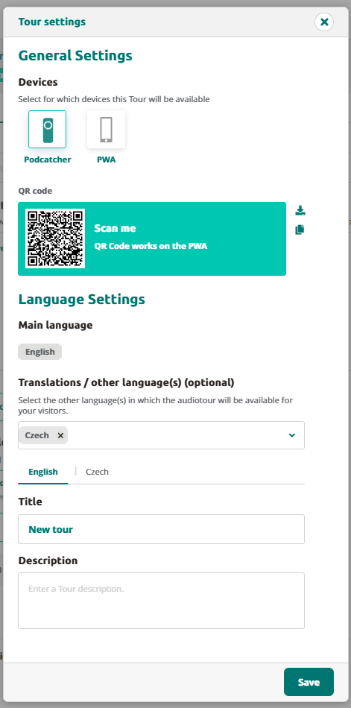
To access the tour settings, go to the tour page and click on Tour Settings located in the top-right corner of the page. This will open up the Tour Settings pop-up.
The Tour Settings pop-up displays general information about the tour. To apply any changes, make the necessary edits and then click the Savebutton.
In the General Settings section, you can select which devices this tour will be available on.
In the Language Settings section below, you can select which languages the tour will be available in. Please note that it is not possible to change the main language of the tour once it has been set.
You can also customize the translated title and description of the tour for each available language.
By adjusting these settings, you can ensure that your tour is optimized for your target audience, making it more accessible and appealing to a wider range of users.
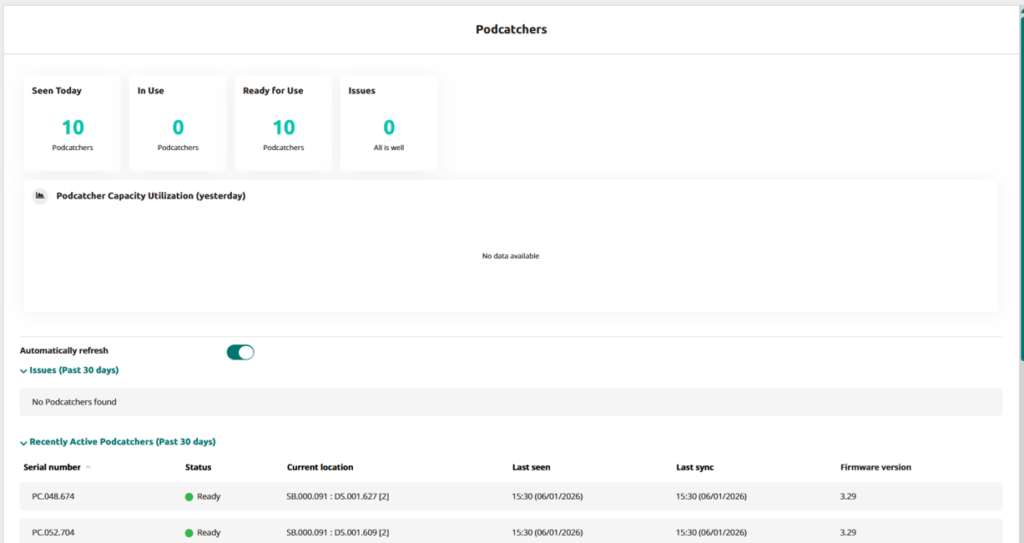
The Podcatcher overview provides you with a quick glance at the latest information about the Podcatchers. This allows you to see the status of the Podcatcher, when it was last synced and seen, and in which Sync Device.
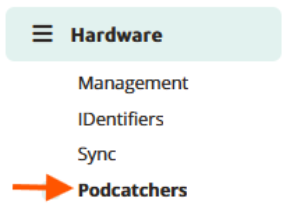
You can access this page following the path on the sidebar.
The overview is divided into two main sections:
Podcatcher data
This section provides a clear snapshot of the current status of your Podcatchers. You can monitor:
Seen Today: Podcatchers that have connected to a Sync Device during a sync today.
In Use: Podcatchers recognized today that have been removed from the Sync Device and not yet returned.
Ready For Use: Podcatchers still in the Sync Device, available for immediate use and without any temporary issues or errors.
Issues: Podcatchers currently flagged with an ‘Error’ status.
A utilization graph displays Podcatcher activity from the previous day, highlighting peak usage times and helping you optimize device availability. This information is available in Analytics as well, where you are able to select a date or even view over a longer period of time.
The light green background represents the capacity: the current number of Podcatchers detected on the Site. These are Podcatchers that have been seen in the past 14 days. The darker green shows the number of Podcatchers that were actually in use by a visitor. (Based on Tour log data). Hovering the mouse over the graph will pop up the exact numbers.
When usage hits 80% or more of capacity, an ⚠️ is shown.
Podcatcher List
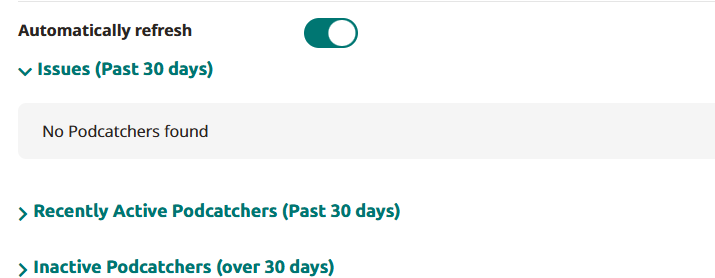
This list includes all Podcatchers assigned to your location, organized into three categories:
Issues (Past 30 days): Contains Podcatchers which have the status “Error” which have been seen within the past 30 days.
Recently Active Podcatchers (Past 30 days): Contains Podcatcher which do not have the status “Error” (so warning or Ready) and have been seen within the past 30 days.
Inactive Podcatchers (Over 30 days): Contains Podcatchers which have not been seen for more than 30 days. It includes all statuses (“Error”, “Warning”, “Ready”)
Overview when drop down vensters are mostly closedOverview when certain drop down vensters are opened
For each Podcatcher, the following details are provided:
Serial Number: The unique identifier for each Podcatcher, visible here for reference only.
Status: Indicates the Podcatcher’s state during the last sync.
Ready: The device is available and ready for visitors.
Warning: The Podcatcher requires syncing again, or the battery is nearly depleted.
Error: The device is not functioning and should be returned. Click “Error” for step-by-step return instructions.
Current location: The Sync Device location where the device was most recently detected. It shows the Sync Device’s serial number, Dockings station’s serial number and the slot number (shown in parentheses)
Last Seen: The date and time the Podcatcher was last connected to a Sync Device.
Last Sync: The most recent update when new content was loaded to the device.
Synchronization of the Podcatchers is the process of updating them with the latest published content, and retrieving Analytics data and diagnostics from the Podcatcher.
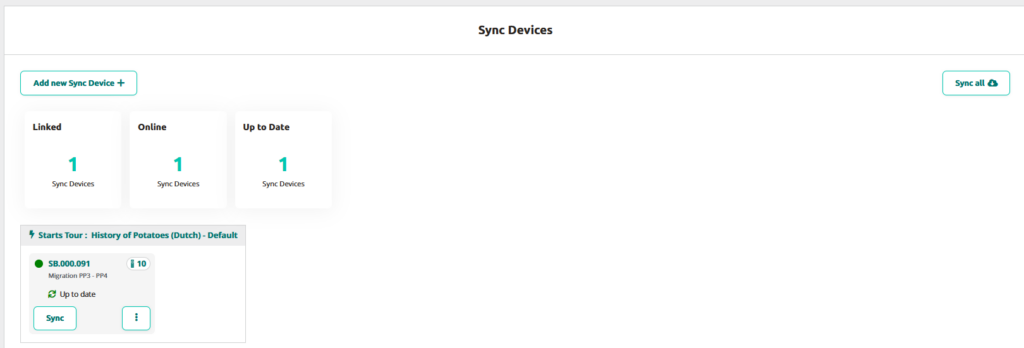
The Sync page will show all the Sync Devices registered at the site.
With this button you can start the synchronisation simultaniously for the added Sync Devices.
Linked
The number of Sync Devices linked/registered to this Site
Online
The number of Sync Devices that are online
Up to Date
The number of Sync Devices that have the latest content
Sync Device settings
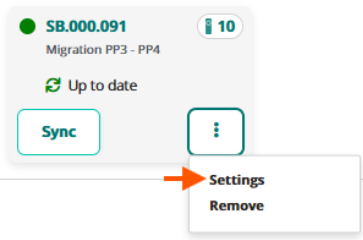
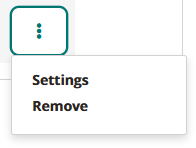
When clicking on the Kebab menu, two options will appear: settings and remove.
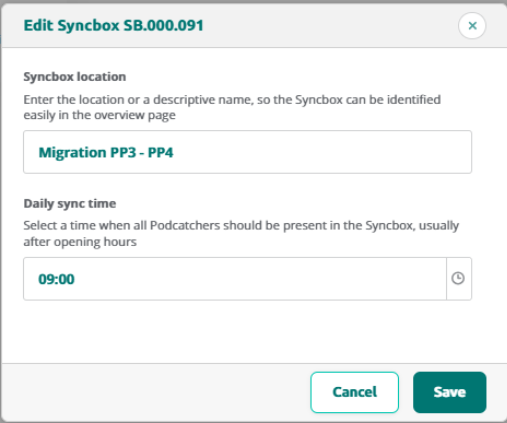
To remove the Sync Device from the Platform, simply click on remove. When clicking on settings, you can edit the Sync Device location or daily sync time.
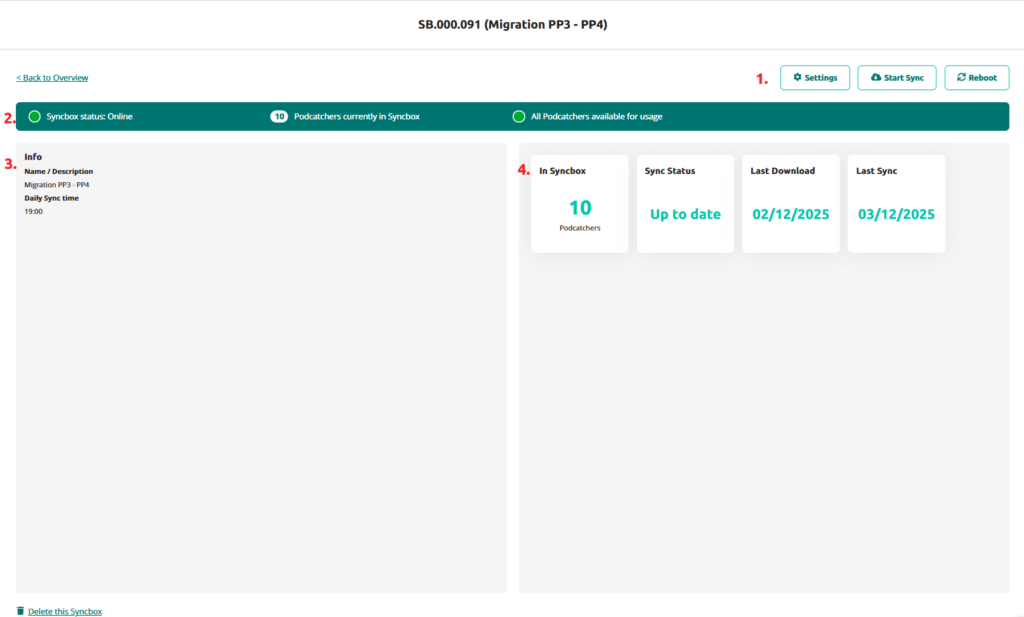
Sync Device Detail overview
When clicking on Sync Device, the Sync Device detail page will be displayed and information is shown in different segments.
In this overview you will see:
1. Settings
Settings
Here you can edit the location name and sync time
Start Sync
Manually start the synchronisation for that Sync Device
Reboot
Rebooting Sync Device
2. Overview bar lists
Offline/Online Status of the Sync Device
How many Podcatchers are currently in the Sync Device
If all Podcatchers are ready for usage
3. Info block
The Sync Device Info block shows the name you’ve provided for the Sync Device and daily sync time.
4. In Sync Device / Sync Status / Last Download / Last Sync
This block shows:
In Synbox/ Syncconsole — Displays the current number of Podcatcher devices registered in the system
Sync Status — Indicates whether the device’s content is fully synchronized and up to date
Last Download — Reflects the most recent timestamp when the Sync Device downloaded content
Last Sync — Records the date of the most recent synchronisation event
Click on Back to overview to go back to the main page of the Sync Devices overview. For information on Dock statuses go to the Podcatcher overview page.
The IDentifier overview provides you with a quick glance at the latest information about the IDentifiers.
This allows you to see the status of the IDentifier:
IDentifier code
What stop it’s connected to
what language it’s connected to (start IDentifier)
When it was last triggered
Battery status
Add IDentifiers
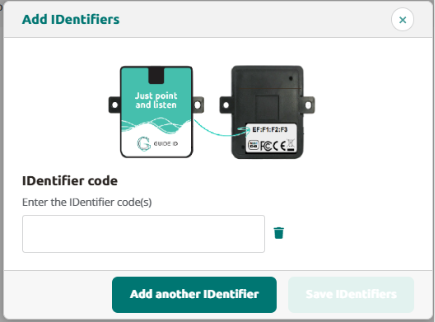
Through this button you can add one or more IDentifiers, so that later on you can easily connect these to your preferred stop. The added IDentifiers will be listed in the overview.
Click on Add new IDentifier+ and fill in the codes which is on the back of the IDentifier. The code should be in a XX:XX:XX:XX format.
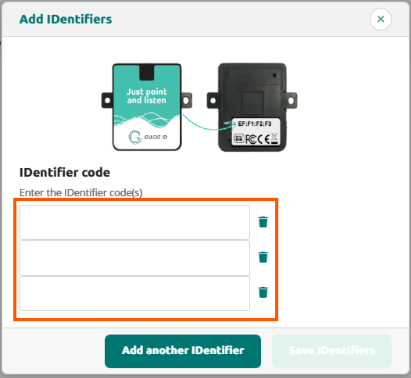
To Add multiple IDentifiers, simply click on Add another IDentifier and fill in the codes of these IDentifiers.
Link IDentifier to stops
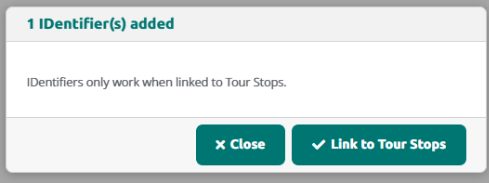
After adding IDentifiers, you can either immediately link it to a stop or do it at a later time.
1.Link directly to a stop
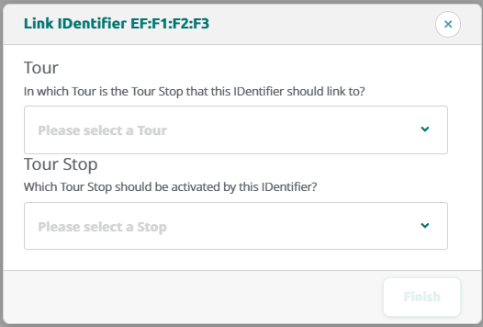
To link it directly, click on Link to Tour Stops to select the Tour and the preferred stop and click finish
2. Linking from overview list
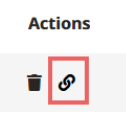
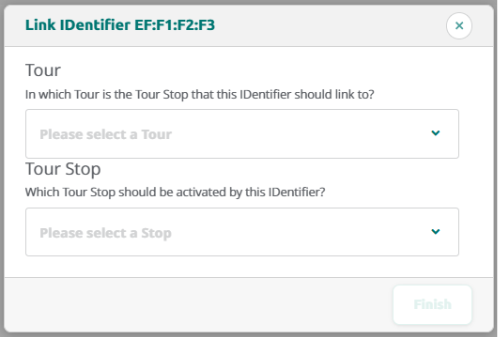
Select an IDentifier from the overview list and click on the link icon in the Action column
Complete the linking process by selecting the Tour and the preferred stop.
Delete or unlink IDentifier
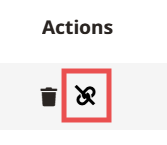
To unlink an IDentifier from a stop, simply click on the unlink icon. It will disconnect the IDentifier from the stop, but is still shown in the overview. This way you can link it to a new or other preferred stop.
To remove an IDentifier from the IDentifier overview click on the trash icon to delete it from the overview page.
Adding layers can serve a variety of functions, for example when your main audio fragment for a stop becomes lengthy, you can provide more detailed information by adding a layer. For instance, you can present historical background or details about an art piece as a separate layer. This way, visitors who are not as interested in the history can still enjoy the primary story of the art.
Adding layers
To add a layer to your tour, follow these steps:
Click on a stop within the tour.
Click on “Open clip view”
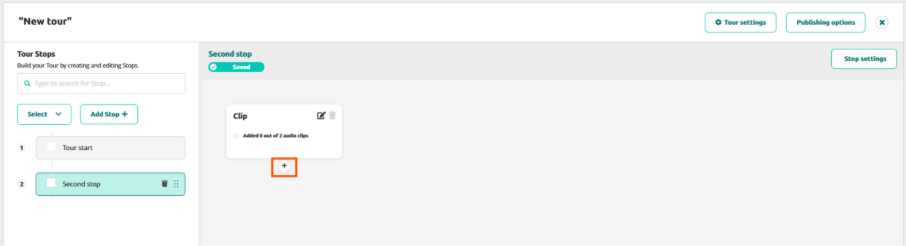
Hover your mouse cursor over the clip, and a small “+” icon will appear.
Click the “+” icon, and a new clip will appear with a line connecting it to the previous clip, labeled as “Auto play.”Users can choose any of the four options: A, B, C, or Auto Play
At this point, the layer has been added, and the purpose of adding the layer becomes relevant.
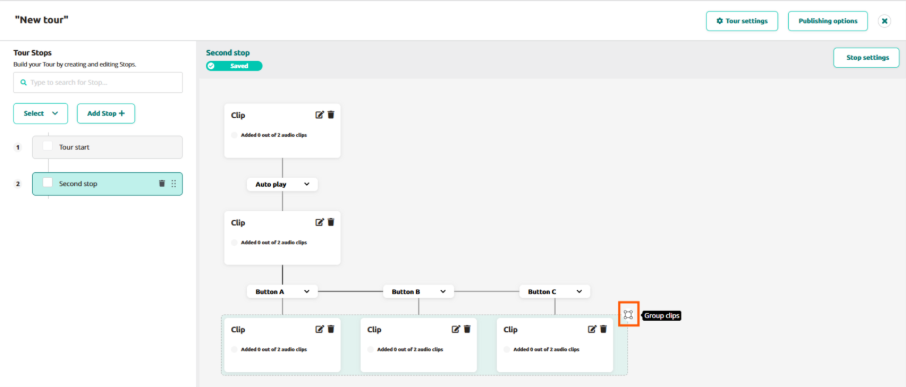
If you want to include an optional segment of audio, click the “Auto Play” dropdown button and select any of the available A/B/C buttons. It’s essential to provide an explanation in the first clip to guide visitors. For example, you can include text such as “Press A to learn more about the painter’s life.”
Multiple clips require more than one option or button. Simply click on the “+” icon . After selecting Button A, the lines connecting the clips will automatically change from “B” to “C” when clicking on “+” icon.
You can click the group icon to group the clips together and ungroup them. Grouped clips share the outgoing connection, ensuring that the following clip remains the same regardless of the chosen option.
For additional layers, click the “+” button below a clip or group and repeat the process. Note that if you want to chain a clip group to another group, you need to include an “in-between” clip. This step is crucial to ensure proper advancement through the tour, otherwise the Podcatcher wouldn’t know which of the following clips it needs to play to advance..
By incorporating layers into your tour, you can create a more engaging and interactive experience for visitors. These layers add depth, personalization, and an element of fun to your tours.
Transform Your Exhibition Ideas into Complete Audio Experiences
The AI Tour Generation feature in the Guide-ID platform allows you to rapidly create engaging audio tours with minimal effort. This powerful tool takes your basic exhibition information and transforms it into professional, ready-to-use audio stops with consistent narration and optional translations.
Prerequisites
Before starting, ensure you have:
Active Guide-ID platform account with administrator privileges
Basic exhibition information (titles, themes, key artifacts)
Clear understanding of your target audience and tour objectives
Approximately 5-10 minutes of time for initial setup (generation occurs in the background)
Step-by-Step Instructions
1. Initiate Tour Creation
Log in to the Guide-ID platform
Navigate to Tours > Create New Tour
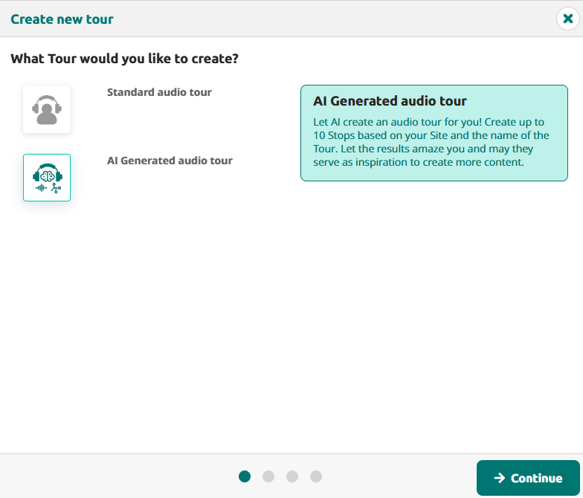
In the tour creation wizard, select AI-Generated Tour option
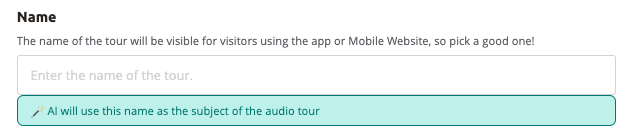
Enter a descriptive title for your tour, it will be used as subject of the audio tour
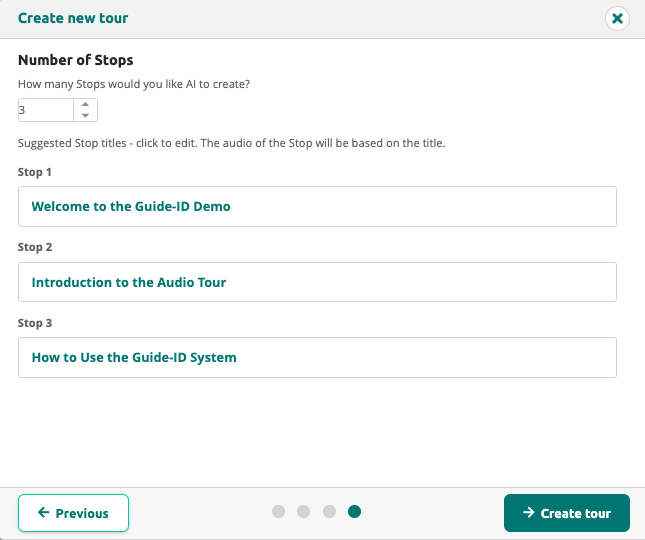
Select the number of stops (2-10)
The Stop titles are immediately suggested. Change them to have a different theme/focus per stop
Click “Create tour”
Tip: Choose titles that helps the AI understand what the focus of the tour should be
2. Review the created tour
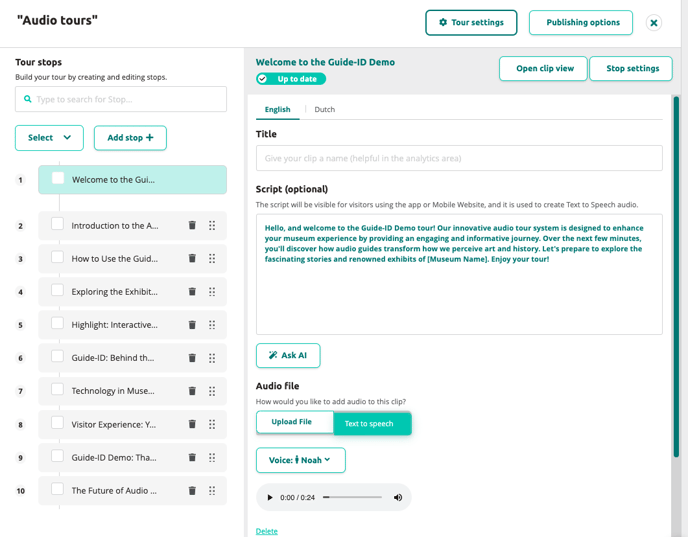
Stand by AI is pondering, it normally takes between 1-5 minutes to create the tour. when it is done the following is created
A transcript per language
With the help of randomly selected voices the audio is generated
For each individual stop, review
Script: read the script and/or listen to the generated audio. Finetune the fragments where needed
Voices: the voices are selected randomly,
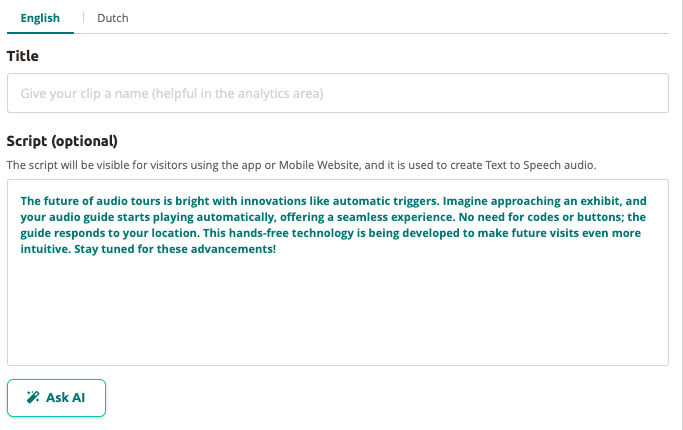
you can use “Ask AI” to change the tone of voice or create new translations.
Next Steps
After creating your AI-generated tour, publish and sync it.
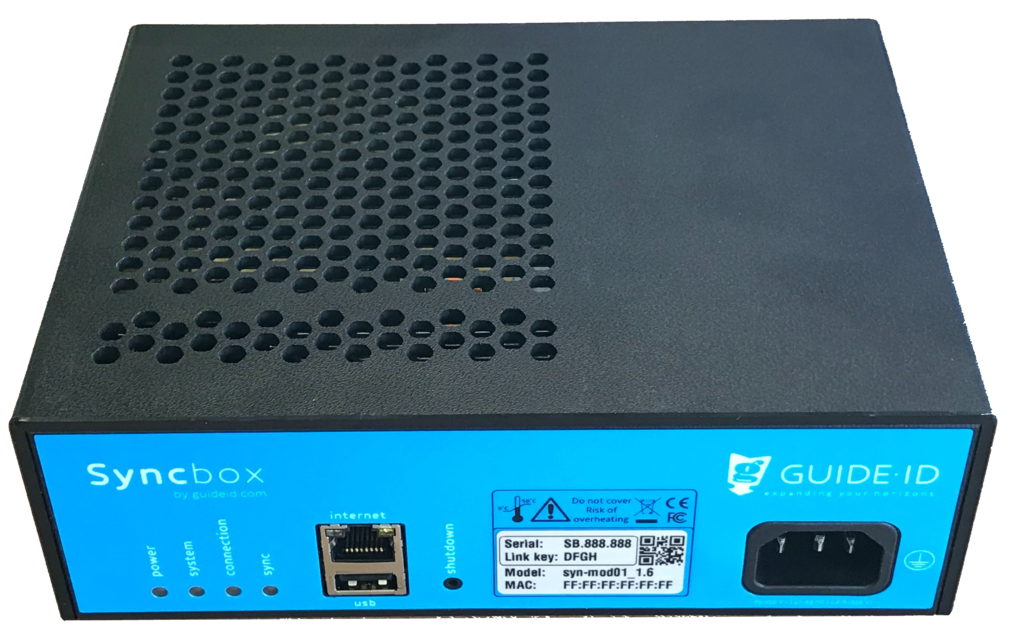
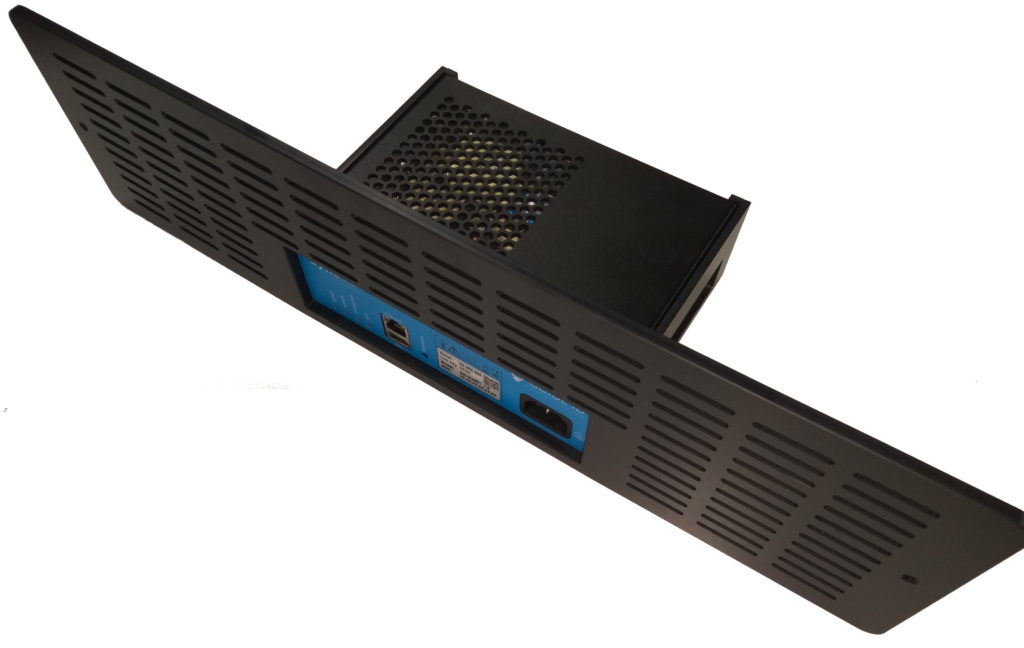
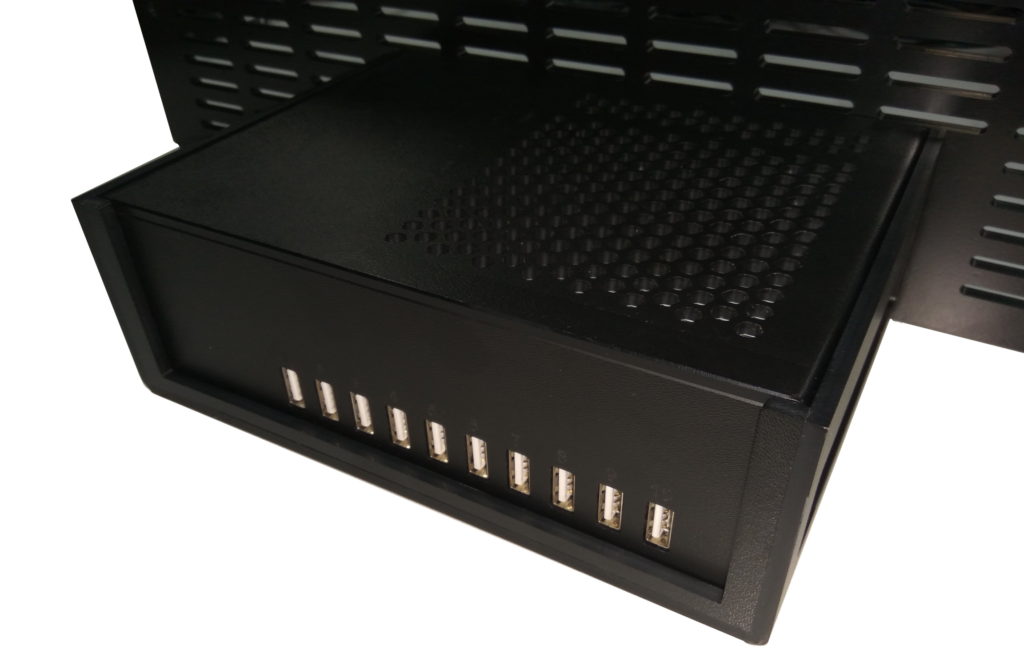
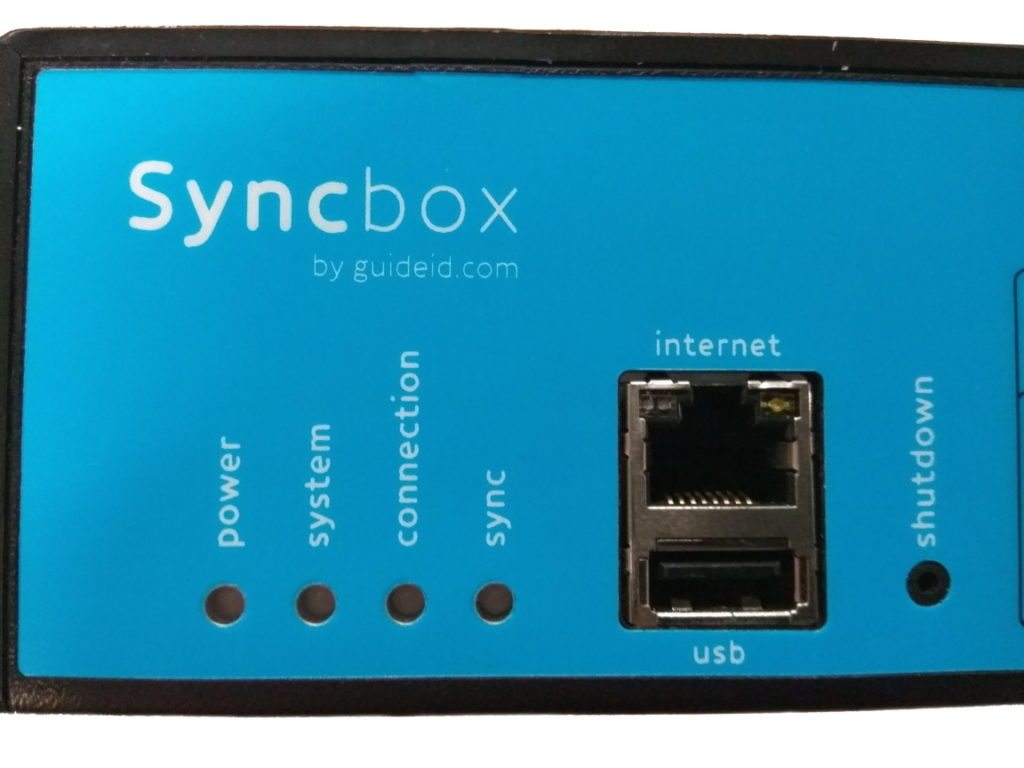
The Syncbox is a compact computer, designed by Guide ID to charge and synchronize Podcatcher audio guides. You can connect up to 10 dockingstations (100 Podcatchers) to one Syncbox. If you have more Podcatchers on location you will need multiple Syncboxes.
The Syncbox is IEC 62368 certified. However the following safety requirements apply:
Use the Syncbox only within the specified operating temperature range (0-50 C).
Do not cover the ventilation openings. Risk of overheating.
Use the provided AC power cable only.
Connect AC cable to an earthed mains socket outlet or extension cord.
Mains socket outlet must be easily accessible to allow disconnecting the cable.
Ethernet port is intended for LAN connection installed wholly within the same building structure.
The Syncbox contains a Lithium-Ion battery (750 mAh, 3.7V, AA format). The battery is IEC 62133 certified.
Caution:
Do not replace the battery. Risk of explosion if the battery is replaced by an incorrect type.
Disposal of the battery into fire or a hot oven, or mechanically crushing or cutting of a battery, can result in an explosion.
Leaving the battery in an extremely high temperature environment can result in an explosion or the leakage of flammable liquid or gas.
Subjecting the battery to extremely low air pressure may result in an explosion or leakage of flammable liquid or gas.
1.5. Requirements
Important: The Syncbox must be connected to power and internet 24 hours per day, 7 days a week.
To connect the Syncbox you will need:
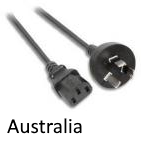
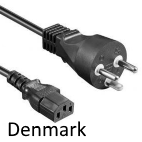
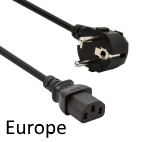
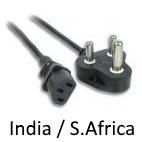
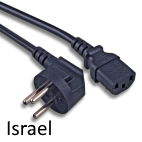
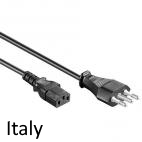
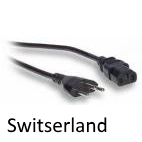
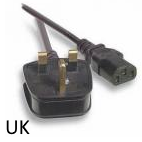
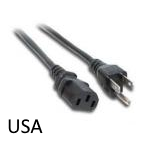
Available power outlet (country specific AC Power cord is provided)
Internet connection, by means of either:
Ethernet cable or free socket (CAT5 or CAT6 standard)
WiFi network (IEEE802.11n / g / b, 2.4 GHz bands)
1.5.1. Power
If power is removed, the Syncbox will continue on battery power for about half an hour. It will indicate this by beeping periodically. See Running on battery power.
1.5.2. Internet
If internet is disconnected, the Syncbox will remain functional for a maximum of 2 days. However contact with the Portal is not possible.
The internet connection has the following requirements:
Fully functional internet access to websites (HTTPS).
If you have multiple devices, a Router with DHCP is required. For multiple Syncboxes built into cabinets, a network switch is provided to make them share a single connection.
If you have a firewall, outgoing access to HTTPS (TCP port 443) is required. The Syncbox uses only outgoing connections on that port. No port forwarding is required for incoming connections. Whitelisted domains should include:
syncboxapi.guideid.com
syncboxlogs.guideid.com
syncboxdebug.guideid.com
Using an Ethernet cable is recommended above using a WiFi network. Connecting the Syncbox to your WiFi network requires manual configuration. Please refer to advanced network configuration.
Internet access through proxy servers is supported, but may require manual configuration. Please refer to advanced network configuration.
2. Installation
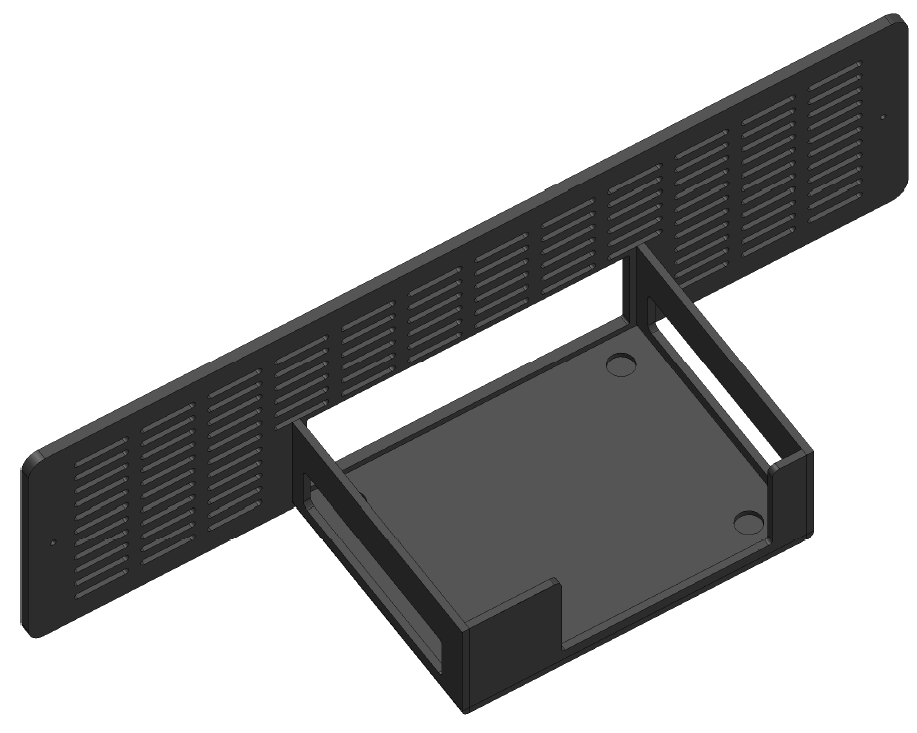
2.1. In a cabinet
On the rear of the cabinet, remove the cabinet holder (2 screws)
Place the Syncbox in the cabinet holder
Guide the 10 dockingstation USB cables out of the cabinet, and connect them to the rear of the Syncbox (see Notes on USB cabling)
Mount the cabinet holder (2 screws)
Connect the Ethernet cable (or USB WiFi dongle, to the USB port combined with the Ethernet connector)
Connect the Power cable
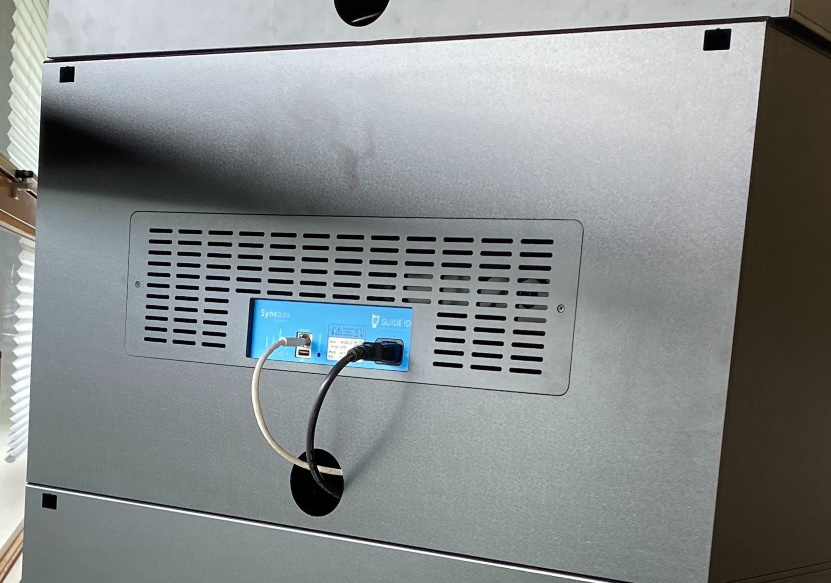
Note that when a cabinet is placed on top of another, cables may be guided internally as visible in the image below. In this case:
Power cables are combined using a (European) extension cord. The extension cord is provided by Guide ID and has a country-specific power cord
Ethernet cables are combined using a network switch, which is provided by Guide ID
2.2. Tabletop
Place the Syncbox on a flat surface, not obstructing any of the ventilation holes
Connect one or more Dockingstations to the rear of the Syncbox (see Notes on USB cabling)
Connect the Ethernet cable (or USB WiFi dongle, to the USB port combined with the Ethernet connector)
Connect the Power cable
2.3. Notes on USB cabling
In both installation cases, note that the following is required for USB cabling between the Syncbox and Dockingstation:
USB Hubs are not supported. You cannot use them when connecting the Dockingstations to the Syncbox(es).
Use the USB cables supplied with the Dockingstations. When using the Syncbox to charge the Podcatchers, these cables should be less than 1m in length.
Do not use the front USB port. The Syncbox supports one Dockingstation on each of the 10 rear ports only.
To verify the cabling, after powering on the Syncbox please inspect the LED indicators on the Dockingstations. Lights should be white or green. See section Charging (5.3) for possible other LED colors.
3. Activation
The Syncbox must be activated before it becomes operational.
Notice:
Important: you cannot use a Syncconsole and a Syncbox at the same time. If you are replacing your syncconsole(s) by a Syncbox make sure to delete the syncconsole(s) first.
Beware that when switching from a Syncconsole to a Syncbox, all the published content will be re-synced on to the Podcatchers. This may take a while when you have a lot of content / multiple languages.
Activation steps:
Power on the Syncbox by briefly pressing the ‘shutdown’ button
A pen may be required to reach the button
This is only required if the Syncbox was previously shut down using the button
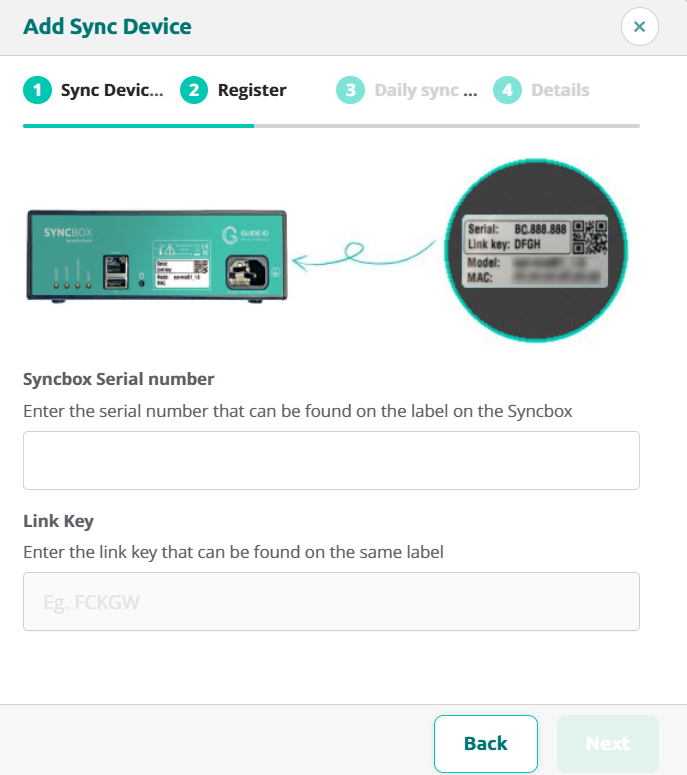
Fill in the details in the dialog. Both the Serial number and the Link key can be found on the label on your Syncbox
Your Syncbox is now ready for use!
After activation, it may take a few minutes before the Sync now button becomes available.
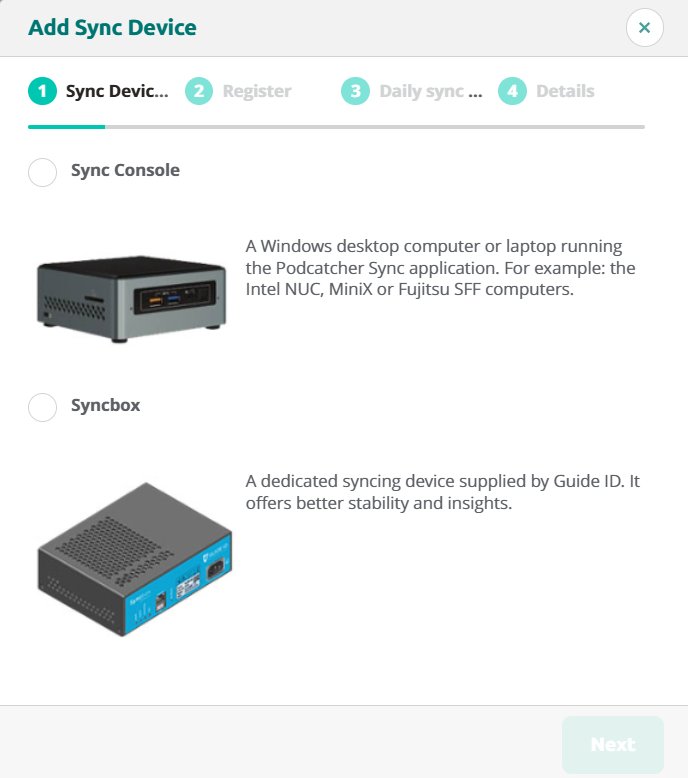
Select device type
Select the Syncbox
Enter Syncbox details
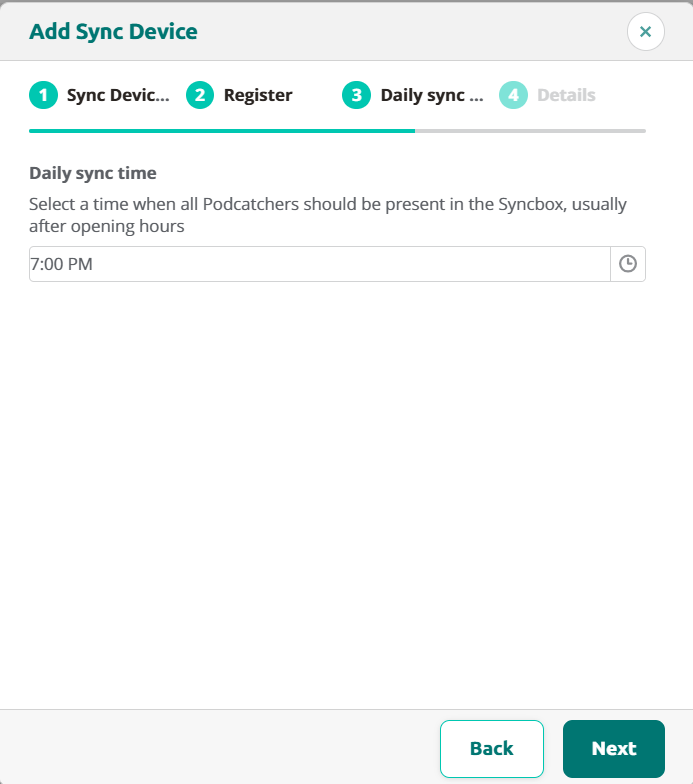
Enter Sync time
This represents the time that starts the automated daily sync
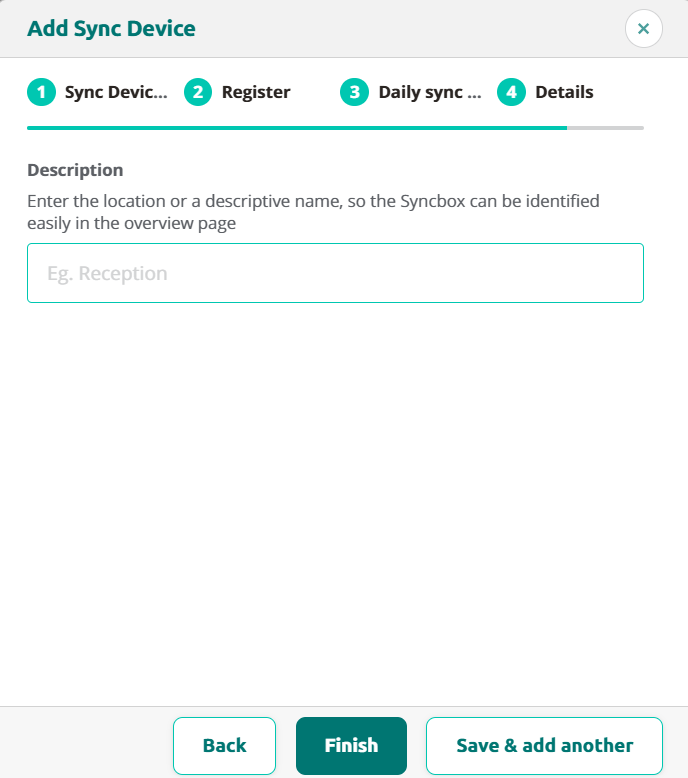
Enter location name
When adding multiple devices it will help you distinguish the syncboxes.
4. Usage
4.1 Power on
Briefly press the push button (labelled shutdown) to start the Syncbox, if it does not automatically switch on when power is connected. On power on the Syncbox will beep and switch on the system LED.
To verify that the Syncbox can connect to the Portal, please verify that the connection LED becomes green after connecting the Ethernet cable (or USB WiFi dongle). This can take a few minutes.
Note that when using WiFi, connecting the Syncbox to your WiFi network requires manual configuration. Please refer to advanced network configuration. Also please check this page if your network forces the use of a proxy server and does not support automatic configuration.
4.2. Service Podcatchers
Once connected and linked to your site, the Syncbox will automatically charge, synchronize and service your Podcatchers.
4.3. Shutdown for transport
When disconnected from power, the Syncbox will continue on battery power for a while. Before returning your Syncbox to Guide ID, please shut it down. In order to do so:
Press the ‘shutdown’ button for 10 seconds, until the system LED starts flashing
Wait until the system LED stops blinking
If the Syncbox is placed in a cabinet block, make sure to disconnect the USB cables and to take the Syncbox out of the cabinet holder before sending the equipment back.
5. Troubleshooting
5.1. Lights
The Syncbox has 4 dual-color LED indicators. Each of the LEDs has a separate function. If all is well, all of them should be green or green blinking. Specific information can be found in the sections below.
5.1.1. Power
Color
Blinking
Indication
Actionrequired
off
–
No power, battery is empty or Syncbox switched off
Connect power, press push button
green
no
Power connected, battery full
–
orange
no
Power connected, battery charging
–
orange
yes
No power, battery discharging
Connect power
red
yes
Power connected, battery unable to charge
Contact support
5.1.2. System
Color
Blinking
Indication
Actionrequired
off
–
System off
Connect power, press push button
green
no
System on
–
green
yes
System starting
Wait for startup
orange
no
System about to start
Wait for startup, or press button to cancel startup
orange
yes
System shutting down
If unexpected, contact support
red
no
System recovery mode
Contact support
red
yes
System overtemperature or boot error
Check temperature, if persistent contact support
5.1.3. Connection
Color
Blinking
Indication
Actionrequired
off
–
No connection (no IP address)
Check Ethernet connection and DHCP server
green
no
Connected (inactive)
–
green
yes
Connected (active)
–
orange
no
Internet (not connected to Guide ID)
Check firewall
orange
yes
Connecting
Please wait for connection. This could take a minute.
red
no
Error authenticating
Contact support
red
yes
No internet
Check internet connection or firewall, or complete WiFi configuration when dongle connected
5.1.4. Sync
Color
Blinking
Indication
Actionrequired
off
–
Sync disabled
Activate the Syncbox in the Portal
green
no
Sync finished successfully
–
green
yes
Sync running
–
orange
no
Sync scheduled
Wait for scheduled sync, or press button “Sync Now” in the Podcatcher Portal
orange
yes
Sync updating
Wait for update to complete
red
no
Sync finished with errors
Check dockingstation connections, replace faulty USB cables
5.2. Sounds
5.2.1. System state change
When the Syncbox is started or restarted, a short beep sounds once.
5.2.1. System software updates
An automated restart can happen during a system software update. This will only occur if the Syncbox is idle. In the unlikely event of a failed software update and the Syncbox being unable to continue, a long beep will sound once and the System LED will turn red. It has then entered recovery mode, requiring service from Guide ID.
5.2.2. Running on battery power
If the Syncbox becomes unpowered due to a power dip or disconnection of the main cable, it switches to battery power and will remain running for about 30 minutes. A long beep will sound every 10 seconds during this time.
If the battery is completely depleted, the Syncbox will shut down.
Note that the Dockingstations will be disconnected from the power if the Syncbox becomes unpowered (also while it still runs on battery power). The light on the top of the dockingstations will be switched off and the Podcatchers will start blinking their orange light. Once power is restored, the Syncbox and the dockingstationswill automatically resume operation.
5.2.3. Temperature range exceeded
If the Syncbox exceeds its operating temperature range, it will automatically shut down. A long beep will sound every 3 seconds during this time.
Once temperature is restored to within operational range, the Syncbox automatically resumes operation.
5.3. Charging
The Syncbox can supply power to Dockingstations through the USB cable. If Dockingstations are supplied with power, their LED on top should be green or white. If it is red, there is a problem with the connection between Syncbox and Dockingstation. Please refer to the notes on USB cabling.
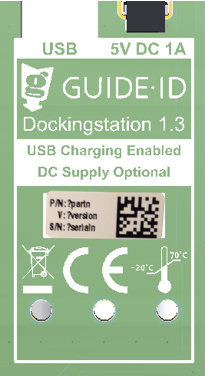
Note that only newer Dockingstationssupport USB charging:
Labelled Dockingstation 1.3. The Dockingstation version can be found on the bottom of the Dockingstation
Serialnumber of DS.005.000 and higher. The Dockingstation serial number is shown in the Sync view in the Portal.
If the Dockingstation does not support USB charging, the DC adapter must be connected.
The table below lists possible dock LED indications.
Color
Indication
off
Dockingstation is off
green
Dockingstation charging and operational
white
Dockingstation charging, not communicated yet
red
Dockingstation not charging
blue
Dockingstation locator function on (user request from Portal)
In afwachting van PP4 info- 5.4. Finding a Dockingstation
5.4. Finding a Dockingstation
If there is a problem with a specific Dockingstation, it may be required to find out where in a cabinet it has been installed. Using the portal, the LED of a Dockingstation can be temporarily set to the color blue. To accomplish this:
Check if the Dockingstation is hardware version 1.3 (supports USB charging). Please refer to section 5.3 to identify it. Dockingstation indication is not available on older hardware versions.
Open the Sync overview in the portal.
In section “Details from most recent synchronization”, beneath the Dockingstation serial, click the button labelled “ON”.
Wait until the button stops blinking. It can take up to 3 minutes for the Dockingstation LED to become blue.
The LED will remain blue for 15 minutes. You can optionally switch it off earlier using the same button on the portal. Note that again it can take up to 3 minutes for the Dockingstation LED to respond.
5.5. Helpdesk
If you have any questions, or require assistance with your Syncbox you can always contact our helpdesk.
Is the Syncbox protected against theft of customer data?
The Syncbox utilizes encrypted SSL transfers only. Periodic security patches are installed. User data is encrypted in an secondary way.
Will the Syncbox automatically power on after power loss?
The Syncbox will automatically power off when the battery is empty, and power on as soon as power is restored, unless it was switched off by the user using the push button.
6.2 ICT related
Will we ever need console access to this machine?
No. The Syncbox is a standalone device without a keyboard or monitor (headless).
Will GuideID or any 3rd parties have remote access to this machine?
No 3rd parties have access to the Syncbox. From our helpdesk, we have an option to enable remote access to the device. This will only be enabled if we need to service the device.
Can the Syncbox be put in a guest VLAN to restrict access to my Intranet?
Yes. The Syncbox only requires access to the servers listed in the Further requirements section.
Do we only need outbound internet access, no inbound NAT?
Correct. Please refer to the Further requirements section.
My network forces the use of a proxy server. Does the Syncbox support this?
Yes, but manual configuration is required if the network does not support automatic configuration, for instance because credentials must be entered. Please refer to advanced network configuration.
I have no Ethernet connection and have inserted a USB WiFi dongle. How to connect to my WiFi network?
Please refer to advanced network configuration, but note that not all WiFi dongles are supported, and can only be inserted in the USB slot combined with the Ethernet connector. Please only use the WiFi dongle supplied with the Syncbox.
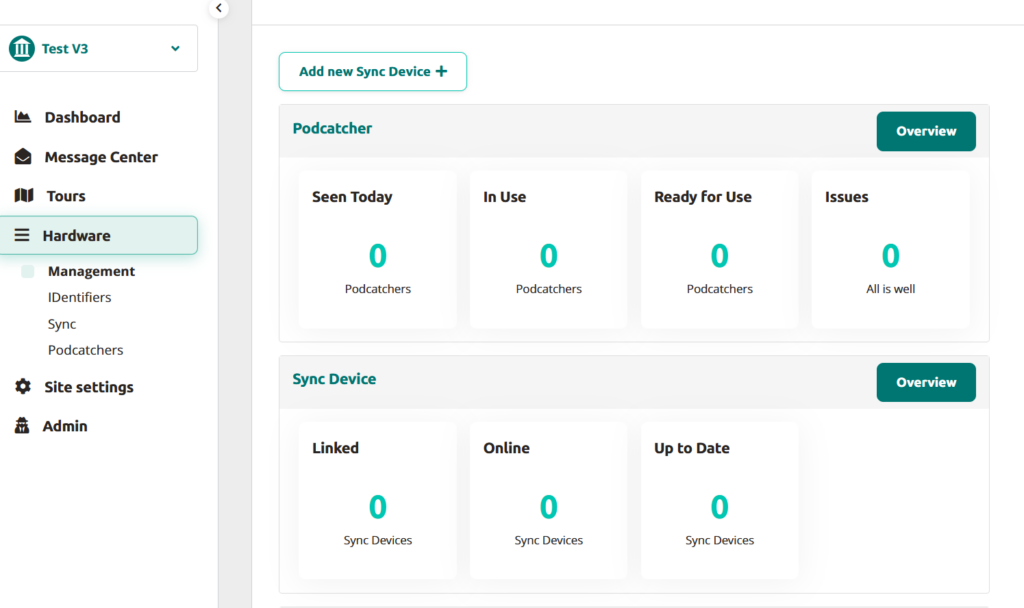
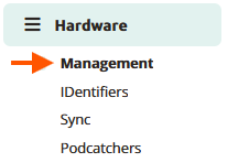
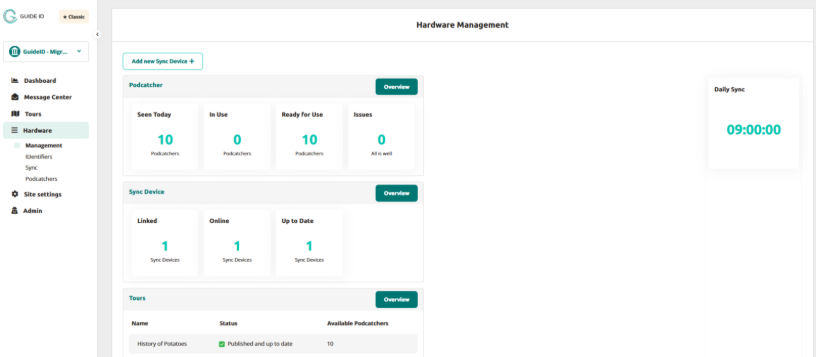
Hardware management gives you a quick overview of the Podcatcher-, Sync device- and tour status and can be accessed by clicking Management on the sidebar of the Platform.
Within the hardware management page we see 4 sections: Podcatcher, Sync Device, Tours and Daily sync time.
Podcatcher
Within the Podcatcher section we can see several blocks of metrics:
Seen Today
This number shows the total Podcatchers seen today.
In Use
This number shows the total Podcatchers currently in use.
Ready for Use
This number is the amount of Podcatchers without issues currently docked in a Sync Device.
Issues
This number is the amount of Podcatchers which have issues.
Overview
If you click on the overview button, you’ll be redirected towards the Podcatcher overview page.
Sync Device
Within the Sync Device section, we can see several blocks of metrics:
Linked
Sync Devices which have been linked to your site.
Online
Sync Devices which have had contact with the platform.
Up to Date
Sync Devices which are up to date.
Overview
This redirects to the Sync Device overview page.
Tours
Within the Tours section we can see several metrics regarding your tours:
Name
This is the Tour name in the default language.
Status
This represents the current publish status.
Available Podcatchers
This represents on how many Podcatchers this tour can be found.
Overview
This navigates towards the Tour overview page.
Daily Sync
This represents the time the automated ‘Daily Sync’ takes place which is entered when adding the Sync device to the Platform and can be edited if prefered. Go to Hardware > Sync and click on the 3 dots in the Sync Device metric, click on settings and you’ll be able to edit the time to your preference.




 English
  Nederlands
  Français