Hardware management

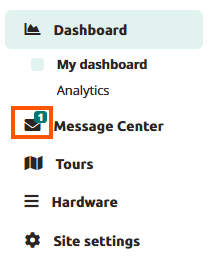
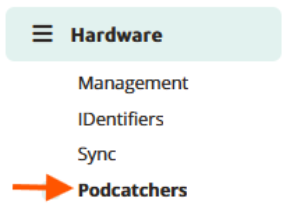
Hardware management gives you a quick overview of the Podcatcher-, Sync device- and tour status and can be accessed by clicking Management on the sidebar of the Platform.


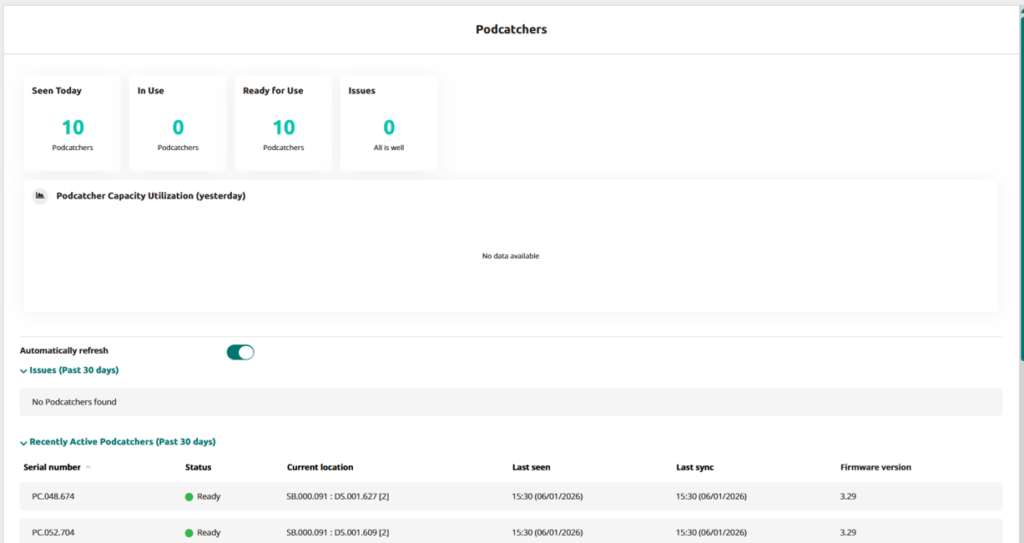
Within the hardware management page we see 4 sections: Podcatcher, Sync Device, Tours and Daily sync time. 


Podcatcher

Within the Podcatcher section we can see several blocks of metrics:

Seen Today 

This number shows the total Podcatchers seen today.  

In Use 

This number shows the total Podcatchers currently in use. 

Ready for Use 

This number is the amount of Podcatchers without issues currently docked in a Sync Device. 

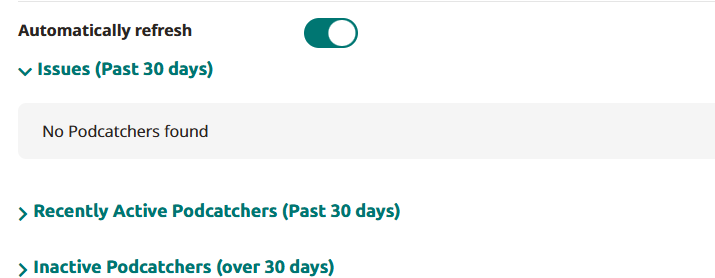
Issues 

This number is the amount of Podcatchers which have issues. 

Vue d'ensemble 

If you click on the overview button, you’ll be redirected towards the Podcatcher overview page.


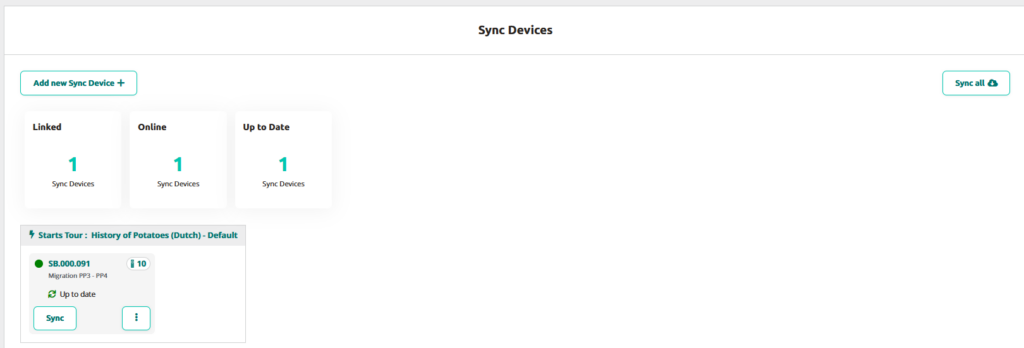
Sync Device

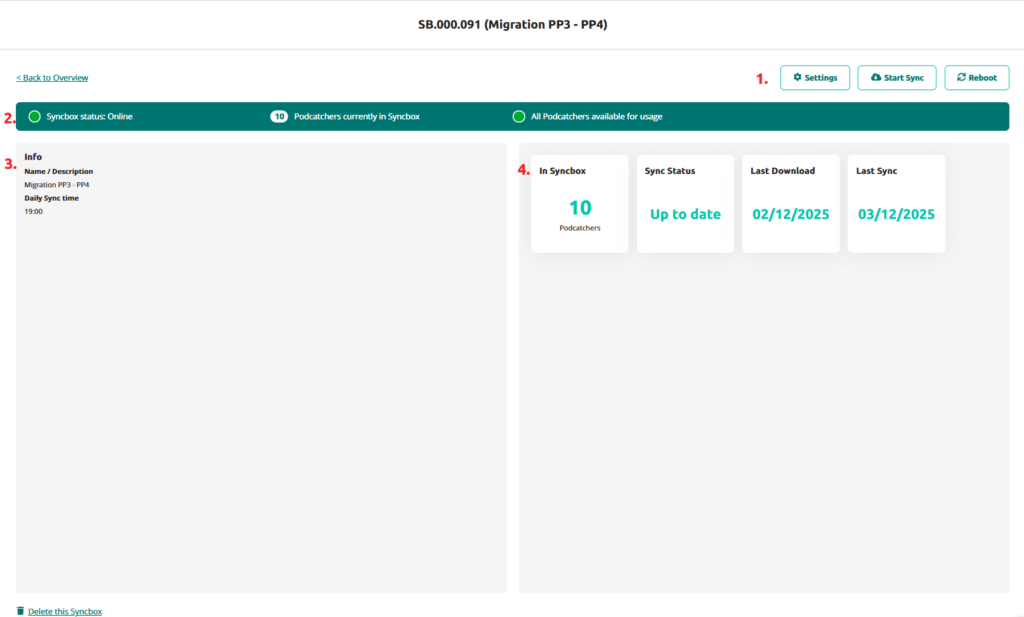
Within the Sync Device section, we can see several blocks of metrics:

Linked 

Sync Devices which have been linked to your site. 

Online 

Sync Devices which have had contact with the platform. 

Up to Date 

Sync Devices which are up to date. 

Vue d'ensemble 

This redirects to the Sync Device overview page. 

Les visites guidées
Within the Tours section we can see several metrics regarding your tours:

Nom 

This is the Tour name in the default language. 

Status 

This represents the current publish status. 

Available Podcatchers 

This represents on how many Podcatchers this tour can be found. 

Vue d'ensemble 

This navigates towards the Tour overview page. 

Daily Sync

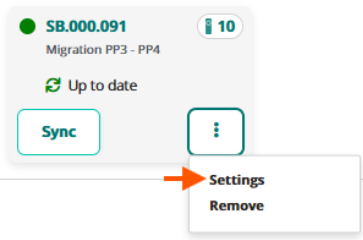
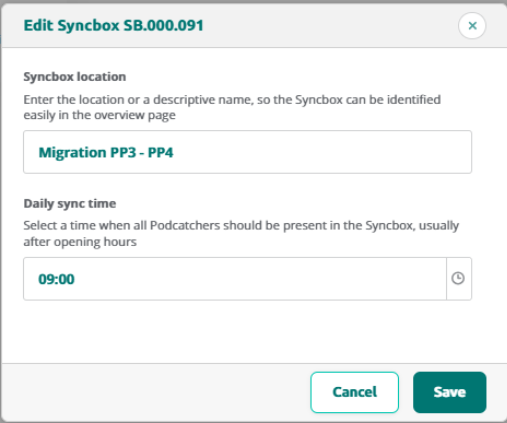
This represents the time the automated ‘Daily Sync’ takes place which is entered when adding the Sync device to the Platform and can be edited if prefered. Go to Hardware > Sync and click on the 3 dots in the Sync Device metric, click on settings and you’ll be able to edit the time to your preference.


PWA

With the migration to our Podcatcher Platform we’ve changed the Mobile Website to PWA(Progressive Web App).

PWA offers several convenient features designed to streamline access for both you and your visitors.

Acces PWA

6 (1)-1

Finding the page

To access the PWA settings and its accessibility options, navigate to Site Settings and select PWA (Mobile Website).

PWA

QR Code

Instead of manually typing the code, visitors can conveniently scan a QR code. This can be achieved by displaying the code on printouts near the tour’s starting point or on your counter. Simply click the download button to obtain a scalable QR code version. When a smartphone scans the QR code using a dedicated app or the device’s camera, visitors will be automatically redirected to your Mobile Website page.

Design

To improve site recognition, it is highly recommended to upload a cover image for your PWA. Click the “Upload image” button to get started, select an image to upload, and crop it to the specified aspect ratio. Upon clicking “Save,” you can immediately observe the applied changes.

By utilizing these PWA features, you can improve accessibility for visitors, simplify access via custom URLs and QR codes, and enhance the visual appeal of your site with a personalized cover image.

How to enable PWA

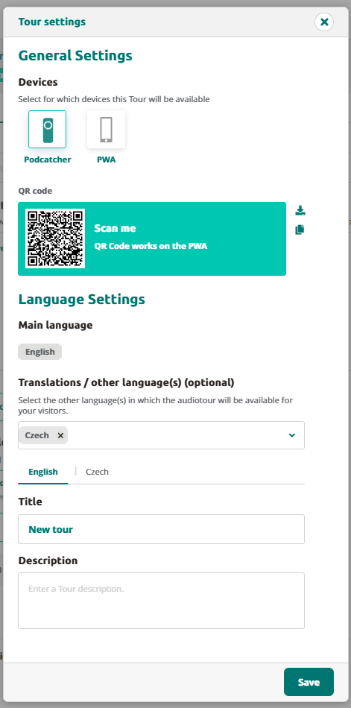
To enable PWA simply go to Tours, select the tour you want to make available for PWA and go to the tour settings.
To activate PWA, click on PWA. If it is highlighted with a green border, it is actiated. If the green border is not displayed, then PWA is not active. Then click Save at the bottom right.

To use the QR code, copy or download the QR code from the tour settings. You can also find the QR code via Site Settings > PWA.

When the visitor scans the QR code with their mobile phone, they will see the following:

1 (1)

The visitor will be advised about their surroundings when using PWA and will be advised to use headphones or earphones.

2 (1)

If PWA is activated for multiple tours, the visitor can select which tour they want to listen to.

3 (1)

Depending on the language available for the tour, the visitor can select the desired language.

4 (1)

To listen to the desired stop, the visitor selects the stop.

5 (1)

After that, they can listen to the stop.


Podcatcher V3 settings

Here you will be able to adjust the volume, Alarm, Podcatcher settings and Autostart. Go to Site Settings and click on Podcatcher V3.

Podcather Volume

The toggle to the left represents the minimum volume, whereas the toggle to the right represents the maximum volume

  • Volume minimum: Volume minimum qui peut être réglé par le visiteur lorsqu'il appuie sur le bouton de réduction du volume.
  • Volume maximum : Volume maximum pouvant être défini par le visiteur.
  • Volume initial : The Podcatcher’s initial volume when it is taken out of its dock 

Alarme

The Podcatcher can sound a warning signal if it ‘thinks’ it’s being taken out of the Site. See cet article pour plus d'informations.

Temps d'inactivité: Si cette valeur est supérieure à zéro, le Podcatcher émettra un signal d'avertissement après le nombre de minutes défini.

La durée: Durée du signal d'avertissement, en secondes. Le signal d'avertissement s'arrête également lorsque l'on appuie sur n'importe quel bouton.

Paramètres de Podcatcher

Générer un retour d'information sonore lorsqu'on appuie sur un bouton: Lorsque cette case est cochée, le Podcatcher émet un clic audible lorsque l'on appuie sur un bouton.

Publishing a tour

Publishing a tour means making the latest version of your tour available to visitors.

Any change made so far is only visible in the tour builder, but not yet on the Podcatcher or other devices.

There are three publishing “states” a tour can be in:

  • Unpublished: Tour is not available to visitors and has never been published
  • Published: Tour is available to the public and up to date
  • Published: with changes: The tour has been edited since it was last published.

Once you’re happy with your tour, go publish it. Go to the tour and select the Publishing Options button at the top-right of the stop list of that tour.

Clicking the button will bring up a dialog where any missing content is listed, as well as allowing you to see what has changed since the last time you published.


The changes made to the tour since it was last changed, can be viewed in a similar fashion.

Status

In the My Tours list you can easily see the status of each tour.

For the Podcatcher the synchronisation is still needed for each Podcatchers to have the latest content & changes. This is often scheduled in the evening.

To publish the tour in My tours, simply click on the icon with the arrow facing up.

Generate content using AI

The AI functionality in the Platform allows you to generate content quickly and effectively using predefined prompts.

This tool utilizes advanced algorithms to enhance or modify your script based on specific needs, such as simplifying text, adjusting the tone, or translating it into another language

Step-by-step Guide for Using AI Content Generation:


    1. Open a Stop
      : Begin by selecting a stop within an existing or new tour for which you want to generate or modify content.

    2. Fill in the Script Field: Enter the text you want to use or modify in the script field. This can be a short snippet or a longer piece of text.

      image-20240124-152040
       
    3. Click ‘Ask AI’: After entering your text, click the ‘Ask AI’ button to activate the AI functionality.

    4. Choose a Predefined Prompt: A dropdown menu with various predefined prompts will appear. These prompts range from making the text child-friendly, shortening it, simplifying it, adjusting the tone, to translating the script.

      image-20240124-152206
       
    5. Select a Prompt: Choose a prompt that aligns with the purpose of your modification. The chosen prompt determines how the AI will edit your text.

    6. View the AI Output: Once you’ve selected a prompt, the AI generates a new version of your text in real-time, which automatically appears on the screen.


image-20240124-152250

  1. Review and Decide: Wait for the AI to finish generating the text. Then, review the generated content and decide whether to keep it or not.

  2. Use ‘Discard’ or ‘Apply’: If you decide not to use the AI-generated text, click ‘discard.’ This will remove the new text, retaining the original. If you want to use the AI-generated text, click ‘apply,’ replacing the original text with the AI-generated one.

These steps provide an efficient and user-friendly process for applying AI-driven content creation within your tours, saving time and enhancing the quality of your content.

How can I use AI?

After selecting ‘Ask AI’ on our platform, you’ll see various prompts to help adjust your text. These options are categorized into three groups: ‘Rewrite,’ ‘Change Tone,’ and ‘Translate.’ Each category offers specific functions for rewriting, tone adjustment, or translating your original text to better align with your goals and target audience. Here’s an explanation of each prompt to assist you in choosing the most suitable option for your text.

image-20240124-152206
 

Rewrite

  1. Kids Friendly: Rewrites the text to make it appealing to children aged 7 to 12. It uses simple and positive language with short sentences and repetition for emphasis. The content is suitable for short audio segments, considering sensitive topics carefully.

  2. Make Shorter: Intended to shorten the text by approximately 33% while preserving the essence and key themes. The result is a concise text that still clearly and coherently conveys the original message.

  3. Simplify: Simplifies the text for readers with basic language knowledge (B1 level CEFR). It simplifies complex ideas using straightforward language and sentence structures while maintaining accurate and informative content, suitable for short audio segments in museum tours.

Change Tone

  1. Casual: Adapts the text to an informal, casual tone. Designed for museum audio tours where a relaxed and accessible style is desired. The prompt retains the original message and factual content but changes the tone to address listeners more effectively.

  2. Confident: Rewrites the text to reflect a confident tone. Useful for conveying authority and expertise in museum audio tours while preserving respectful and thoughtful treatment of sensitive historical and cultural subjects.

  3. Friendly: Adjusts the text to a friendly tone. Ideal for creating a warm and inviting atmosphere in museum audio tours, with the text remaining respectful and considerate for a diverse audience.

  4. Professional: Converts the text to a professional tone. Suitable for audio tours requiring a formal and authoritative approach while maintaining accuracy and respect for historical and cultural context.

  5. Straightforward: Makes the text direct and uncomplicated. Intended for audio tours where clear, no-nonsense communication is desired, especially when addressing complex topics in a simple and understandable manner.

Translate

  1. Translate: Can be used in two ways.

a. If you have entered text in the main language of the tour (main language), you can go to the translations. Here, the text in the main language is displayed in gray. Click on ‘translate’ to translate it into the language of the tab.

b. You can also manually enter text in the script field. If you want it translated into the language of the tab, click on ‘translate.’

Adding IDentifiers

IDentifiers are essential for activating content on Podcatchers. By holding the device close to the IDentifier, visitors can access the associated content. Adding an IDentifier to a stop links it to the content, with the first stop of each tour acting as the start of the tour and requiring an IDentifier for each language.

Note: Any IDentifier used to start a tour and select a language can be present only once on your site. Otherwise, Podcatchers and PWA wouldn’t know which tour and language to start with. Other IDentifiersmay be used once per tour, but can be used just fine in multiple tours as a non-language Beacon.

1. Adding IDentifiers for the tour languages

To add an IDentifier to start the tour in a language, click on the first stop and open the Stop Settings.

Enter the IDentifier code from the physical device and make sure the label’s flag matches the language. Then, add the IDentifier to each language by clicking the language codes and entering the IDentifier codes there.

Save the settings by clicking the Save button.


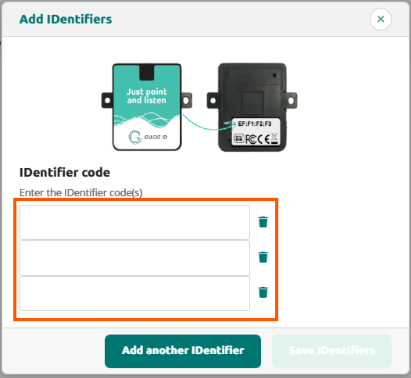
The IDentifier code can be found on the back of the IDentifier


2. Adding IDentifiers for other stops

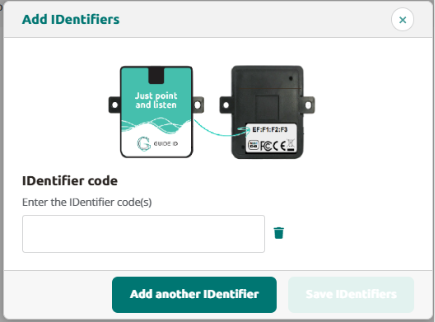
Adding IDentifiers to other stops is just as simple. Click the stop, open Stop Settings, and add an IDentifier by clicking the Add IDentifier button and entering the IDentifier code.

Cliquez sur le bouton Add IDentifier button and enter the IDentifier code.
More Beacons can be added by clicking Add another IDentifier.

Note: Other language settings do not apply to IDentifiers here. They do, however, apply to the title of the stop.

3. Hardware overview

The Hardware tab provides a quick overview of the battery levels in your IDentifiers. 

Stop IDentifiers are the IDentifiers assigned to stops in your tours, and the list shows the last activation and battery status.
 

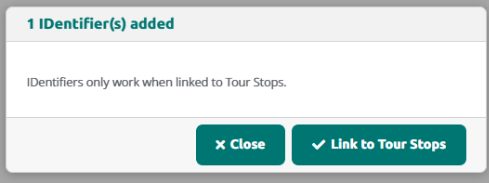
New IDentifiers can also be added using the Add new IDentifier button. You can add multiple IDentifiers at once, or save the IDentifiers and close the popup with the buttons.

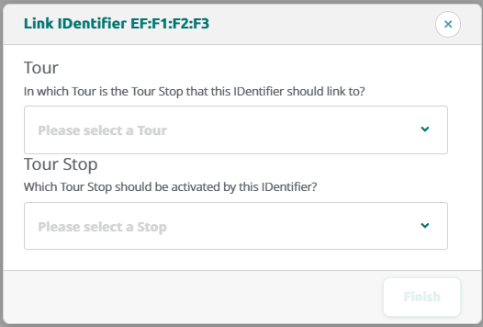
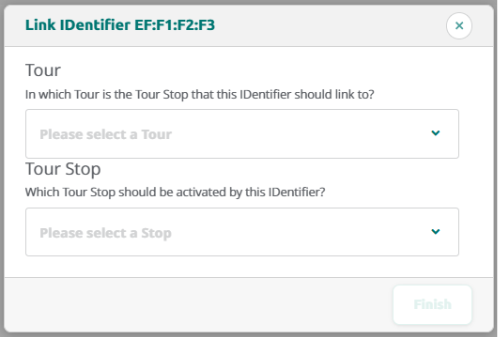
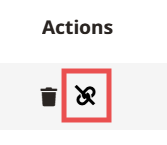
Lastly, you have the option to link the IDentifier to a stop as the final step, although it is not required.

By following these simple steps, you can simply add and manage IDentifiers for your tours. Do not forget to publish the tour and synchronise the Podcatchers.

Arrêts

Arrêts

Les arrêts correspondent à des lieux dans le monde réel et sont utilisés pour jouer l'audio approprié. Un arrêt possède un ou plusieurs clips qui sont reliés entre eux par des connexions. Un arrêt possède les pages suivantes :

Introduction

While a Stop is a place in the Site – usually near a piece of art in a museum, it can also be a room or an explanation for visitors – a Clip (or set of Clips) is the content that gets played when a Stop is triggered. This page gives you full control over how Clips flow into one another.

Remarque : If your Stop should just play one Clip, then you can skip most of the explanation and just use the Script field to add content or upload an audio file.

Creating a tour

Clip de départ

Go to Tours and click on Add new Tour. Select what tour you like to create and click on continue.

when selecting AI generated audio tour, it will create up to 10 stops with AI based on your site and the name of the tour. Go to Generate content using AI for more information

Fill in the name of the tour, this will be visible for visitors using PWA.
Select the desired device. It’s possible to use both Podcatcher and PWA and click on continue.


Select the main language.
Select other languages if prefered.

After clicking on create tour, a Stop with Tour Start is created. This is your tour start, a.k.a. you’re language start and is set in the languages you have chosen in the previous step.

To add more stops, just click on Add Stop.
This way you can add several stops to your tour. Don’t forget to give it a title.

Adding content

When adding content to a stop, you can choose whether you want to upload audio, or use the AI options with Text-to-Speech. Repeat the process for as many stops as you need to complete the tour.

Uploading audio: Click on select file or just drag the audio file to the uploadfield next to select file.
Ask AI: Enhance or modify your script based on specific needs, such as simplifying text, adjusting the tone, or translating it into another language.
Using Text-to-Speech: With Text-to-Speech you can simply generate the inserted script to audio file when clicking it

For more information on AI and Text-to-Speech Generate content using AI

Your contect is automatically saved when uploading audio or when a script is added.

To add IDentifiers go to Adding IDentifiers